ECO-FRIENDLY CATAMARANS
Built With Purpose, Crafted With Care
A "made in France" shipyard optimised for the development of our range
The Windelo Team
Founders
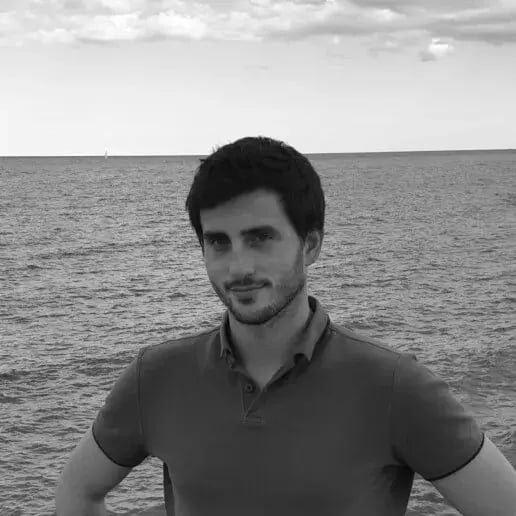
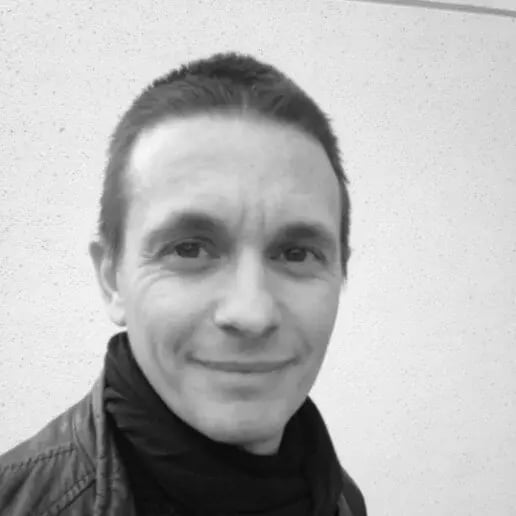
Olivier & Gautier KAUFFMANN
Olivier KAUFFMANN, Windelo’s President, also Ex-CEO of Orangemarine, Ex-CEO of Cabesto, Ex-Chairman of the Executive Board of Décathlon France, Ex-Executive Director of the Alcopa and Mulliez groups.
Gautier KAUFFMANN, Windelo’s CEOer, Ex-Sales Manager for BtoB & Commerce Marketplace Europe at Orangemarine.
Windelo is the desire to expose oneself to something new, innovative, powerful, bigger than oneself. To seek innovations on materials, industrialization techniques, uses and to impel a new economic reality:
“We want to be part of this transformation, totally related to respecting our environment.”
Who could know if it is the father or the son who is the most passionate? It doesn’t matter. The important thing is to write an innovative project within a family culture, for today and for generations to come. Hand over the guiding light; this is Olivier Kauffmann’s will. “At first, I wanted to make my boat for my family and me; go on trips around the world living on an efficient and pleasant catamaran. I dreamed of a new quality of space. Today, the dream has matured, and I want to share it with the great family of sailors. »
Windelo is the desire to expose us to something new, innovative, powerful, and more significant than oneself. To seek innovations in materials, industrialization techniques, and uses to impulse a new economic reality. “We want to be part of this transformation related to the respect of our environment; it is for us essential to work in this respect of men and nature. Men are at the heart of the project and desire to recruit and form a passionate team, surrounded by experts recognized as the best in their field.
And the innovation doesn’t stop here because the constructive process makes it possible to envisage fast evolutions from one boat to another while remaining well-priced. An ambitious and respectful project; Welcome to the Windelo adventure.
Architects and naval engineers
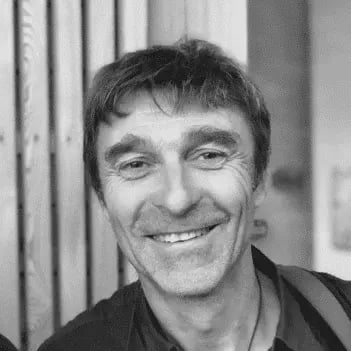
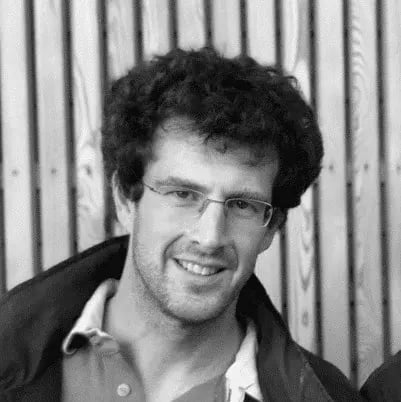
Christophe BARREAU & Frederic NEUMAN
The well-known architects Christophe BARREAU and Frédéric NEUMAN have extensive experience in designing high-performance production catamarans (Catana 471; Outremer 45, 49, 51; TS3, TS5, etc.). Their work is influenced by a strong desire to innovate in building composite boats.
The challenge is to build a boat combining performance under sail and pleasurable navigation while planning pleasant and generous living spaces. This is what we propose by grouping the helmsman and maneuvers in the center of the boat as well as in the living space that occupies the rear of the nacelle.
The cruising program for this new boat raises the question of the antagonism between the search for performance under sail and the pleasure of navigation, and the development of pleasant living spaces.
The team has never been afraid to innovate in its quest to strike the perfect balance between speed and cruising comfort. It meant that the design remit presented by Windelo was particularly appealing: “The Windelo team is driven by a real desire to optimize the hull and they have given us the resources to do this”, says Christophe Barreau. “We carried out CFD calculations and through digital modelling we created hull developments that reduce drag.”
The originality of the answer is provided here in the arrangement of the cockpit bringing together the helm and maneuvers to the center of the boat and in the arrangement of living space that occupies the rear of the nacelle.
Just behind the mast the outer cockpit offers two helm stations protected from the wind and spray, a beautiful view of the sails and bows, and allows to have all the maneuvers on hand while limiting the needs to circulate on the bridge. Out of navigation, the cockpit can be more widely protected from the outside and open to the rear space.
Fully opened behind this cockpit, we have not developed two living spaces duplicating one inside the other but a single large space that is adjustable. We have focused our efforts on the geometry of the material and visual limits of this space and on the opening kinematics of the bays. Once opened, they “disappear” to transform the interior into an exterior. The generosity of these openings also allows to modulate the ventilation of this space by playing on a wide range of opening on its four sides.
This work on the modularity and the disappearance of limits is found at the extreme rear of the nacelle, with an articulated platform to the davits transforming it into a floor when anchored, and in the rear cabins, whose wide turning porthole eliminates the angle between side plating and backside. The cabin space is therefore generous despite the relative narrowness of the hulls.
All these choices allow us to combine a contained hold of the nacelle, pledge control of the weight estimate, to a generous living space, with a central part given to navigation and maneuvering. The slenderness of the forward spikes, the significant free height under the platform, and the attention paid to the centering of the masses, complete the marine qualities expected for an offshore navigation program.
The other originality of the project brought by this new construction site is in the approach of “eco-design” on materials and construction. Strongly limiting the use of molds, the latter brings a greater margin of freedom in the variations and evolutions of the boats thus conceived.
Researchers at the National School "Mines d'Alès"
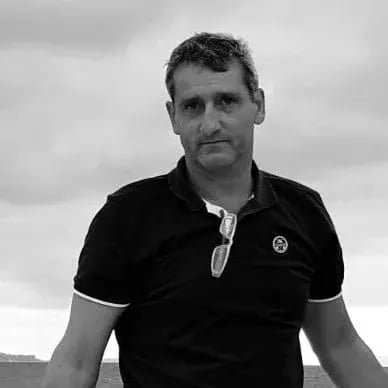
Patrick IENNY & Didier PERRIN
Patrick IENNY and Didier PERRIN are researchers at the Ecole nationale des mines d’Alès Center of Materials. They worked on the R&D for the boat structure’s eco-composite sandwich, on prototyping assembly methods, as well as on the materials used as shock absorbers for the production of our catamaran hulls.
As part of the creation of new types of catamaran made in Occitanie, an audacious choice of ecological innovation has been selected in partnership with the Materials Center of « Mines d’Alès » (C2MA – IMT MINES ALES) (Gard, France).
It’s a question of combining ecological performance in terms of minimizing the environmental footprint and structural resistance, and this, in a global approach of circular economy on all parts of the boat.
To do this, and in connection with the IMT MINES ALES, Windelo has relied on the use of secondary raw materials, competitive virgin petroleum-based materials, that fully comply with the specifications in terms of mechanical performance. This is a real first step to the development of a 2.0 fleet ships fully integrated into the challenges and ecological challenges of the 21st century.
Associated with an ecological approach of circular economy integrating a not insignificant part of competitive secondary raw materials from virgin materials, the architectural design and the resistance of materials on the new Windelo catamarans are mechanically tested in the Materials Center of « Mines d’Alès » (C2MA – IMT MINES ALES) (Gard, France) in connection with the architects and designers of the project. The design of the ship, and in particular the hulls and bows, go through a search for efficient structuring and arranging of materials composing it, combined with a mechanically optimized geometrical assembly.
To this end, specific test developments, such as the study of distortion of the structure and of the panels constituting the hull of the ship, are studied by digital image correlation techniques coupled with standardized strength tests.
Windelo Production Facility
After a year of construction works at the Windelo shipyard, the team has now settled into its new 1600 sq. m production facility. Setting up the facility in the Occitania region was a strategic choice. It enables Windelo to benefit from all the expertise and infrastructures on offer at the port of Canet-en-Roussillon. The 4000 sq. m quayside plot is the first development phase for the boatyard. “The diversity of professionals and facilities in the area make it a hub of excellence for every aspect of the catamaran business. Following the evolution of the project, we could gradually expand our facilities to 10,800 sq. m,” says Gautier Kauffmann, Operations Manager at Windelo.
An industrial facility designed for building eco-friendly catamarans
Our production facility is tailored to our industrial process. It was designed to accommodate new developments in our boat range and satisfy increases in demand. It houses all the services needed to build and market our boats, including a design office, marketing, sales and administrative departments, and component manufacturing, assembly and fitting workshops.
Ground floor of the Windelo factory: assembly, infusion, carpentry, and storage areas
The Windelo boatyard is divided into distinct zones. The structure of boats is made from an eco-friendly basalt fiber and PET composite in a cutting-edge infusion facility. Once trimmed in the building designed for that purpose, different elements are assembled in the main workshop where three boats can be built at the same time.
The production facility also includes a joinery where all the furniture and components for fitting out the boats are made.
First floor of the Windelo factory
A mezzanine at the back of the workshop provides direct access to the sterns of the boats under construction. This facilitates fitting out the catamarans’ decks and interiors. Various elements can thus be prepared and finished on the mezzanine before being fitted to the boats.
The storage rooms are split between the ground floor and the raised deck to optimize the space for boat building.